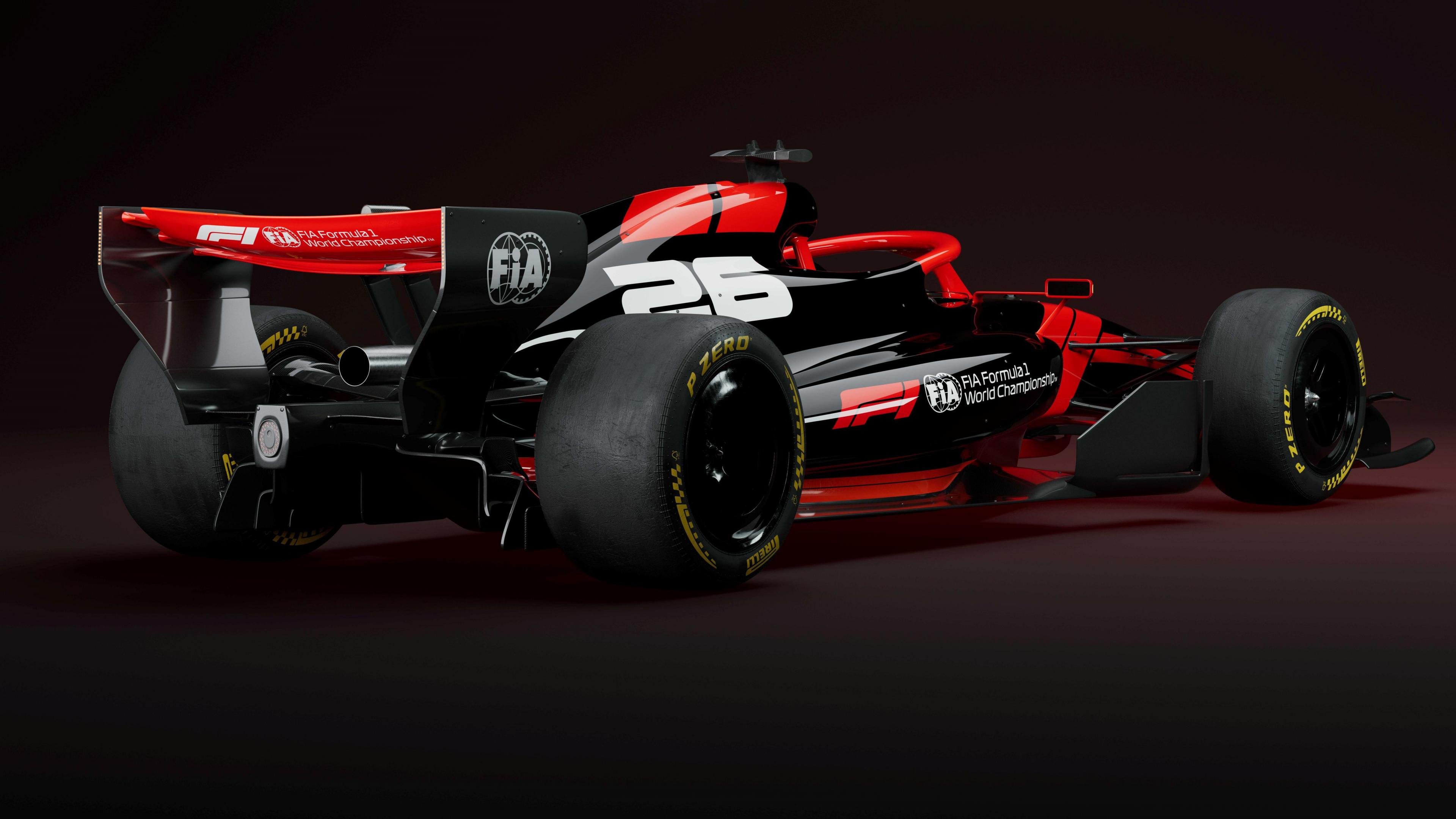
The vehicles for the 2026 season are designed to be lighter, more agile and sustainable compared to current models.
The world of Formula 1 has revealed the official terminology that will be used to describe the intricate details of its new 2026 rulebook.
The sport is implementing what is arguably the largest rules overhaul in its competitive history for the 2026 campaign, featuring new chassis and engine rules and the compulsory introduction of eco-friendly fuels.
The updated 1.6-litre V6 turbo hybrids, which keep the 1.6-litre V6 turbo hybrid, boast a substantially higher electrical capacity, driving key advancements in the cars' aerodynamics.
Throughout races, drivers will tactically deploy ERS energy – potentially on qualifying laps – to achieve the optimal performance.
Wide-ranging research were conducted with a diverse audience, including dedicated enthusiasts and casual observers, to determine which phrases would aid comprehension of the key features of the new regulations.
The primary aim was to make a set of intricate features of the sport as straightforward as possible for the broadest viewership.
Consequently, previous placeholder terms for some systems – such as "x-mode and z-mode" for the active aerodynamics – have been phased out in preference for descriptive names that succinctly convey the actual function of the innovation.
Key Technical Innovations
Regulators explain that drivers will have more power to make decisions regarding power usage, energy recovery, and efficiency.
The new regulations mandate a set of functions that will be visually displayed on broadcast screens to enhance the viewers' comprehension of the strategic duel.
- Attack Mode: This takes over from the current DRS. It provides a short boost of battery power deployable when a competitor is close behind the car ahead to assist with an overtake.
- Extra Push Mode: This is a manual energy deployment from the hybrid system that can be used in overtaking or defending. It grants the pilot full engine and battery energy at the activation of a control.
Both of these key functions will have to be managed carefully, as the available electrical charge is capped.
- Active Aero: Both the front and rear wings change configuration – flattening on the long straight sections for reduced drag and top speed, and closing in the turns for peak grip.
- Energy Harvesting: Cars can replenish their battery with regenerative braking, or during coasting at the straight's end or in corners where only limited engine output is applied.
2026 Car Specifications
The 2026 cars will be reduced in size and weight relative to current models, with a wheelbase reduced by 200mm to 3,400mm, width narrowed by 100mm – down to 1,900mm – and the minimum weight reduced by 30kg.
Cumulative downforce is anticipated to be reduced by approximately 15-30%, although constructors will naturally regain performance as they optimize their packages.
Air resistance has been reduced by 40%. The vehicles will employ active aerodynamics – front and rear wings will move on the straight sections to reduce drag and boost top speed and return into place for maximum cornering performance.
Wheels will retain 18-inch wheel rims, but the actual tyres will be slimmer, by a quarter-centimetre on the front and 30mm at the rear.
What's Changing in the Engines?
The 2026 engines will have an approximate 50-50 split in power produced by the internal combustion engine and the electrical system, up from about 20% electrical in the current formula.
The energy recovery system is streamlined through the elimination of the MGU-H, the intricate and expensive unit that recovered energy from the exhaust turbo.
Every car on the grid will be obliged to compete on carbon-neutral fuel, created from biomass or synthetic industrial processes.


